The Role of the In-Store Experience Has Changed
As e-commerce has changed consumers’ spending and dining habits, the role of physical retail stores and restaurants is no longer purely transactional. Now that consumers have the ability to complete purchases at their fingertips, retailers and restaurants alike have had to rethink the role that brick-and-mortar stores play in the shopping experience, as well as the factors that motivate customers to visit stores in the first place.
Today, the in-store experience plays a critical role in attracting customers by providing offerings and immersive experiences that can’t be replicated when ordering online. While e-commerce has grown by leaps and bounds over the last decade, it still only accounts for approximately 20 percent of global retail sales, which leaves plenty of opportunity on the table for brands to create experiences that deliver meaningful interactions and strengthen their brand identity.
What’s Driving the Shift?
Consumers can order products easily and receive them quickly when shopping online, which means that convenience is no longer a differentiator for physical stores. For many shopping and dining experiences, the motivating factor for consumers is how they feel when they visit physical locations in person. Are they valued? Is the environment welcoming, comfortable and attractive? Does the layout make it easy to find what they’re looking for? Does the physical location provide access to a certain product or experience that isn’t accessible online? Do they feel that the brand reflects their personal values? All of these questions should be front and center as brands consider the types of offerings that will drive consumers to visit a physical location.
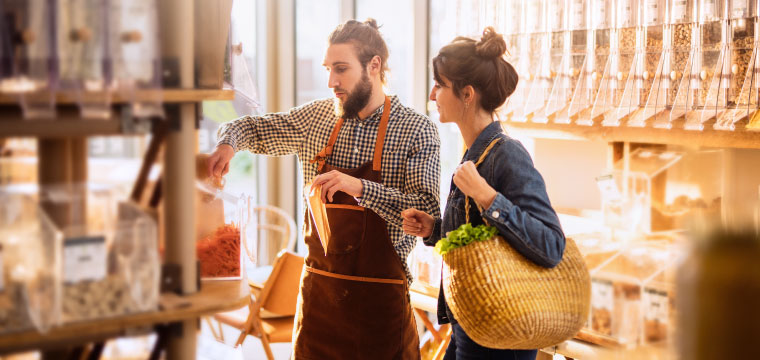
In order to ensure positive responses to these critical questions, brands are looking to offer personalized service, product demonstrations, interactive and/or immersive experiences, and a sense of community engagement or purpose rather than simply serving as a point of sale. For retailers, this could call for pop-up experiences, limited-time offerings or even social engagements that are only available in store. For restaurants, it could be an open kitchen or chef-driven dining event. For convenience stores, it could be an elevated coffee bar experience or in-store contest.
Regardless of the type of business, the common goal is to deliver experiences that create emotional connections and keep customers returning in the future. Customers who interact with brands through omnichannel experiences spend more money, have higher overall conversion rates, return more often and have 30 percent greater lifetime value than customers who interact across a single channel, such as a company website, and this value is further cemented when the customer feels connected with the brand in store.
It Starts Before the Customer Enters the Door
Contrary to the old adage about books, customers will absolutely judge a store by its appearance. Research shows that more than two-thirds of consumers have chosen not to enter a business based on how it appeared from the outside, which means it’s critical for brands to start from the ground up when designing experiences to engage customers.
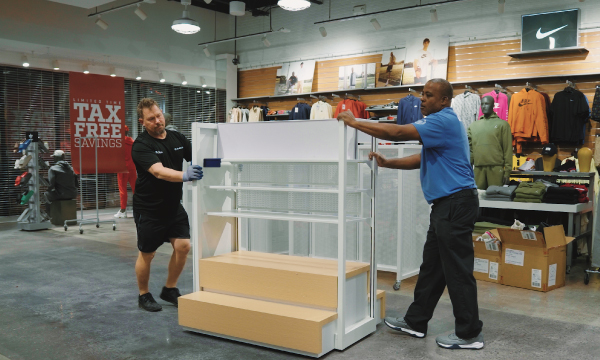
While brands are currently investing heavily in designing immersive, emotionally resonant in-store experiences, delivering those experiences visually and consistently across locations is a far more complex challenge. Every lighting fixture, display, seating element and decoration can make an impression in the mind of the consumer, and this is where FF&E (furniture, fixtures and equipment) logistics becomes not just a back-end function, but a critical driver of the customer experience.
The ability to create settings and experiences that set stores and restaurants apart hinges on how well brands are able to perform behind the scenes when it comes to planning, sourcing, transporting, and scheduling deliveries and installations to support their in-store environments. When executed well, FF&E logistics ensures that the vision created in the design phase translates seamlessly into the physical environment that customers experience.
From precise delivery scheduling to careful handling and installation, these behind-the-scenes efforts enable consistency, quality and brand alignment across every location. In an era where first impressions and emotional connections carry more weight than ever, the reliability of FF&E execution plays a meaningful role in shaping how customers perceive a brand before a single interaction takes place. And in order to create consistently successful and visually compelling experiences, it’s critical to have a trusted partner that can ensure every step, vendor, delivery, installation and opening is handled with care.
As physical retail and dining spaces continue to evolve into destinations rather than transactions, brands that treat FF&E logistics as a strategic capability will be better positioned to stand out. The ability to deliver these projects on time and at scale ultimately supports stronger customer engagement, reinforces brand identity and drives long-term loyalty.
NXTPoint Logistics specializes in complex FF&E project management for retailers, restaurants, convenience stores and more. To learn how we can help streamline your next FF&E project and enable better customer experiences, click here to contact our experts.