
Leveraging FTZs and Customs Bonded Warehousing
NXTPoint Logistics provides companies with the opportunity to more cost-effectively manage their international shipments to reduce some of the cost and complexity of today’s rapidly shifting supply chain requirements.
NXTPoint offers foreign trade zone (FTZ) and customs bonded warehousing space in multiple locations to provide companies with flexibility to navigate many of these challenges while streamlining their operations. By combining FTZs and customs bonded warehousing, NXTPoint defers duties, streamlines customs, stabilizes costs, moves inventory without long-term commitments and supports fast e-commerce shipping. We operate activated FTZ capacity and customs bonded spaces with strict controls and Tier-1 WMS visibility. Some of our other offerings include:
- 320,000 sq. ft. of activated FTZ capacity
- Customs-bonded warehousing (multiple classes)
- Duty deferral until domestic entry or re-export
- Weekly entry and shipment consolidation to reduce Merchandise Processing Fees (MPFs)
- Light assembly, kitting and postponement (offered for many items, as eligible)
- Avoid state and local inventory taxes on foreign and domestic goods stored in an FTZ for export
- Inventory visibility via Tier-1 WMS
- Partnerships with zone administrators and CBP
- Scalable import/export programs aligned to your supply chain needs and financial objectives
- Inventory management and visibility technology for end-to-end supply chain support
Reach out to our team of experts today to assess your organization’s eligibility for FTZ or bonded warehousing space and determine if these solutions could be right for you.
Case Study
Optimizing Distribution and Visibility for a Premium Beverage Brand
A premium bottled water and wine company chose NXTPoint as its exclusive 3PL partner in Florida for food-grade warehousing and distribution across the Southeast and Caribbean. NXTPoint provided scalable storage, seamless WMS/EDI integration for inventory visibility, and full compliance with USDA and customs regulations. The partnership enabled efficient product movement through PortMiami, maintained zero injuries, and earned NXTPoint a 5-star rating as the client’s top-performing facility in 2025.
The Benefits of FTZs and Customs Bonded Warehousing
What Is a Foreign Trade Zone?
FTZs — sometimes referred to as free trade zones — are designated areas within existing warehouse spaces that are often located near ports of entry for U.S. Customs and Border Protection but are exempt from their oversight, processes, procedures and associated duties. When a company elects to store their goods or materials in an FTZ, they are still subject to the laws and regulations of the U.S. and the states where they are located, but duties are not required to be paid on the goods until they leave the warehouse for distribution to the end customer. Furthermore, if the goods are re-exported internationally, they remain exempt from U.S. customs duties and tariffs and can avoid them altogether.
FTZs Fall Into Two Categories
General Purpose
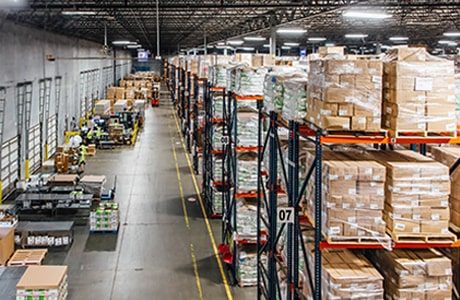
These FTZs can be utilized by many different types of companies and for a number of reasons in line with trade warehouse services.. While generally located at ports or industrial parks, they can be used by multiple companies at the same time and are ideal for business that require warehousing, distribution or low-level manufacturing or assembly. General-purpose FTZs allow companies to avoid or defer duty payments on goods while they are stored, handled or processed.
Special Purpose
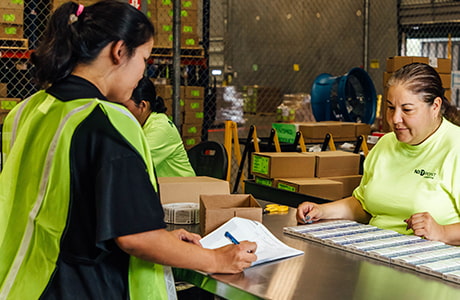
Commonly referred to as subzones, special-purpose FTZs tend to be designated for companies with unique operational requirements that are not able to be accommodated by general-purpose FTZs. These zones must be built, maintained and secured by the companies that utilize them, making them more suitable for larger manufacturers, oil refineries or distributors.
Benefits of Using FTZs
What Is Customs Bonded Warehousing?
Unlike FTZs — which are not under the purview of U.S. Customs and Border Protection (CBP) — customs bonded warehouses (or bonded storage warehouses) are under the authority of CBP. Products or materials that are stored in bonded warehouse space remain under the control of CBP but do not require duty payment until the goods are exported. These facilities are designed to help facilitate international trade by allowing storage for finished goods or for materials that are manufactured or assembled into finished products to be exported at a later date (up to five years from the date of import).
There are many types or classes of customs bonded warehouses — including public and private — with each having a unique purpose or use case. Some of the more common types include:
- Class 1: Government-owned warehouse — These locations are owned or leased by the government and store imported goods that are subject to duties, processing or examination before they are released to be distributed.
- Class 2: Importers’ private bonded warehouse — These warehouses are privately owned be individual companies and are used to store only goods or merchandise of the owner until they are ready to be distributed for sale.
- Class 3: Public bonded warehouse — These locations are available to the public and have shared access by multiple companies to store imported merchandise at a given facility.
- Class 4: Bonded yards or sheds — Heavy and bulky goods or bulk liquid merchandise to be stored in tanks may be assigned to bonded yards. Goods stored may also include enclosures for imported animals, such as stables or corrals.
- Class 5: Bonded bins or elevators — These facilities are used exclusively to store agricultural products, such as grain.
- Class 6: Container freight station (CFS) bonded warehouse — These locations are under CBP authority and are used for deconsolidating ocean or air freight, particularly less-than-container load (LCL) shipments. However, goods may only be stored for a limited period (10 days) before they must be shipped.
- Class 7: In-bond export consolidation (IBEC) warehouse — IBEC warehouses are controlled by CBP and store freight for consolidation before shipment for up to 30 days.
Benefits of Customs Bonded Warehousing
How Do FTZs Differ From Customs Bonded Warehousing?
While both FTZs and bonded storage warehouses offer a number of benefits for international shippers and manufacturers, it is helpful to understand the limitations of each when choosing which option may be right for your company, in line with bonded warehouse costs. The chart below outlines some of the benefits and drawbacks of both to help assess which option may be the best fit for your needs.
| Feature | FTZ | Customs Bonded Warehouse |
| Controlled by CPB | No | Yes |
| Duty Payment | Due when goods enter U.S. commerce | Due when goods enter U.S. commerce |
| Duties Paid on Scrap/Waste Material | No, including no duties on damaged goods | Yes, but no duties on items damaged under CBP control |
| Inverted Tariff Benefit | No; while companies previously had the option to pay duties on finished goods OR their components, this benefit has been eliminated based on recent tariff policy changes. | No; while companies previously had the option to pay duties on finished goods OR their components, this benefit has been eliminated based on recent tariff policy changes. |
| Storage Limit | No time limitation | 5 years from import date |
| Manufacturing/Processing Allowed | Yes, manufacturing, assembly and kitting are allowed | Limited |
| Compliance Requirements | Complex, with FTZ board and CBP approvals and ongoing audits required | More simplified setup; requires customs bond and CBP oversight |
| Security and Control | Strict security and inventory control standards | Tightly controlled by CBP but may be less complex than FTZs |
| Duties Required Upon Re-export | No | No |
| Ideal for | Manufacturers or importers with high-volume, long-term storage needs or plans to re-export | Importers needing secure storage and duty deferral without processing |
In summary, while foreign trade zones may offer a more flexible solution and greater savings for some companies, they may also come with greater compliance requirements and more complex initial setup, whereas customs bonded warehouses may be ideal for short-term storage and re-exports that do not require additional manufacturing, in line with public bonded warehouses.
Find a NXTPoint Logistics Facility Near You
Foreign Trade Zone and Customs Bonded Warehousing FAQs
Awards & Certifications