Why Procurement and Logistics Should Never Operate in Silos
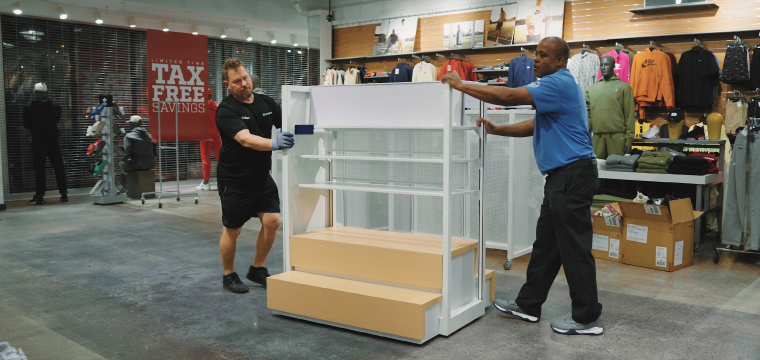
Store openings, remodels and refreshes have their own unique supply chains. The teams behind the restaurants, retail locations, convenience stores and healthcare settings that are looking to complete these complex projects often spend a great deal of time planning the branding and physical aesthetic for their stores, but the reality of how those assets move through the supply chain is much more complicated than teams often realize.
Whether opening new locations, remodeling stores or executing a rebrand, success depends on more than purchasing furniture, fixtures, equipment (FF&E) and other project materials. It requires coordination across procurement, order process management, vendors, transportation, warehousing, inventory management, delivery, construction and installation teams, and there is little to no room for error when planning for an on-time opening. When these functions operate independently, the risk of delays and mistimed deliveries and installations increases significantly.
As companies look to gain greater control, visibility and predictability through the lifecycle of these projects, many are taking a more integrated approach to ensure success from the start. By combining the procurement and logistics management functions under a single umbrella, companies are benefitting from a more streamlined approach to their projects.
Procurement and Logistics Have Traditionally Been Siloed
Historically, procurement has focused on purchasing goods at the lowest possible cost, with a dedicated team ordering products without full visibility into overall project timelines or delivery schedules. Separate teams have been in charge of the transportation, warehousing, delivery and installation of these items, and while it may seem logical at the onset, having two teams operating with separate goals can create issues once a project is in motion.
With different teams working toward different priorities, logistics teams often find that preventable timing and inventory challenges surface down the road. This leaves project managers coordinating across multiple vendors and stakeholders to make up for timing and inventory availability issues because the process was fragmented from the start, resulting in unnecessary complexity.
The Cost of Operating in Silos
The consequences of managing these functions separately can be detrimental to complex logistics projects, which require precision at every step. A single delay or missed timeline due to products arriving too early or too late can trickle down to other crews, ultimately requiring rescheduling and often resulting in delayed openings.
In addition, lack of alignment between procurement teams around project timelines and scheduling can result in added costs due to the need to expedite shipping or pay for additional storage. These costs often negate any savings that were achieved during the procurement phase.
Communication breakdowns can also occur as a result of multiple vendors operating based on different information. When teams aren’t aligned and communicating on a consistent basis, it can be difficult to determine accountability when issues or delays arise. These types of problems rarely result from a lack of effort. Rather, they arise due to a lack of alignment across the teams responsible for each function.
One Strategy. One Process. One Source of Accountability
Complex logistics projects require stringent management from the start in order to be executed seamlessly and ensure on-time openings. An integrated approach to procurement and logistics project management can enable companies to transform these sensitive projects into a competitive advantage.
By having a single source of accountability from start to finish, companies can benefit from real-time insight into procurement, purchase orders, inventory, shipment status and deliveries. This level of insight provides greater control while allowing teams to proactively identify areas of risk and plan around them to prevent disruption to project schedules.
It also enables better overall cost control for the project. Having visibility into inventory availability, shipments and delivery schedules helps companies reduce the potential for added costs due to the need for expedited freight, unnecessary storage and duplicate handling or added touches due to poor scheduling or missing inventory.
A single partner can also help to reduce lead times for customers by centralizing procurement and logistics management, which minimizes the potential for delays and allows companies to improve speed to market with their store openings and remodels. Aligning purchasing schedules with construction milestones, staging inventory properly and ensuring products arrive and are installed on time can all help to keep projects running smoothly.
When managing multiple openings or remodels, having a single source of accountability can also allow companies to more effectively execute complex logistics projects at scale. Having the right processes in place and managing procurement and logistics through a single partner makes it easier to replicate successful processes across dozens or hundreds of locations, supporting growth without increasing operational complexity or burden on internal teams. It also gives companies greater visibility, streamlines accountability and enables better forecasting and decision making to improve predictability with every project.
Success Lies in End-to-End Coordination
As expansion programs become larger and supply chains become more complex, organizations can no longer afford disconnected procurement and logistics strategies.The most successful project teams are managing procurement and logistics through an integrated approach rather than allowing them to operate as separate functions.
Organizations that eliminate silos between procurement and logistics can reduce risk, improve visibility, control costs and create more resilient supply chains. This is increasingly becoming a competitive advantage for brands managing multi-site growth, remodels and rollout programs.
For complex logistics projects, buying the right products is only part of the equation. How those products are procured, managed, stored, transported, staged, tracked, delivered and installed ultimately determines project success.
NXTPoint Logistics specializes in end-to-end management of complex logistics projects, from procuring required items to ensuring your opening occurs on schedule. To learn how we can help streamline your next project, click here to contact our experts.