Record Diesel Prices Are Driving Freight Costs Higher: What Shippers Should Do Now
For many shippers, fuel has gone from a routine transportation expense to a major source of cost uncertainty. With diesel prices reaching historic highs and fuel surcharge programs rapidly adjusting to keep pace, transportation budgets are coming under increasing pressure. While fuel markets remain volatile, companies that take a proactive approach to transportation planning can help mitigate the impact and better manage costs in the months ahead.
Diesel Prices Have Reached Record Levels
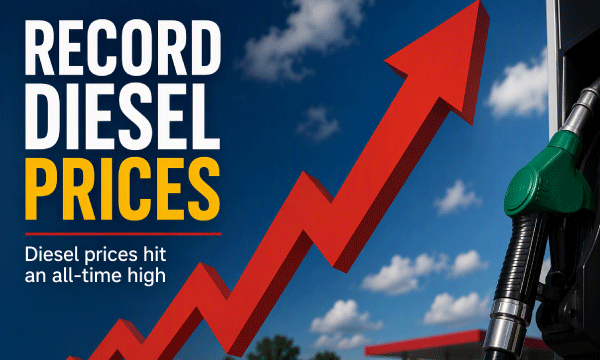
Recent data from the Department of Energy/Energy Information Administration (DOE/EIA) shows the national average diesel price climbed to a record $6.529 per gallon, increasing more than $1.90 per gallon since early July. At the same time, other key diesel benchmarks, including retail diesel prices and ultra-low sulfur diesel (ULSD) futures, have also reached all-time highs, signaling that the market has yet to find meaningful relief.
Industry analysts point to a combination of factors behind the surge, including refinery disruptions, constrained global diesel supply, geopolitical instability and seasonal demand pressures. The result is a fuel market that remains extremely tight, with many experts suggesting elevated prices could persist well into the fourth quarter.
For shippers, this matters because diesel is one of the most significant operating costs in transportation. As fuel prices rise, carriers inevitably seek to recover those costs through fuel surcharge programs and pricing adjustments.
Fuel Surcharges Are Increasing Along With Diesel Prices
While many transportation contracts separate fuel costs from base transportation costs, record diesel prices are now being reflected in freight invoices through fuel surcharges. Most truckload, less-than-truckload (LTL) and parcel carriers utilize formulas tied to the DOE/EIA national diesel average, so surcharge increases often occur automatically as diesel prices rise.
This can create a challenging environment for shippers. Even if contract rates remain unchanged, all-in transportation costs can increase significantly as surcharge percentages move higher. Companies may also experience additional pressure when carriers face a lag between rising fuel expenses and surcharge recovery, potentially leading to requests for rate adjustments or changes in pricing structures.
For organizations managing large transportation networks, these increases can quickly add up, particularly during peak shipping periods when freight volumes and transportation demand are already elevated.
Why Shippers Should Pay Attention
Fuel volatility leads to higher transportation costs, which can affect inventory strategies, fulfillment decisions, customer delivery expectations and overall supply chain profitability. Organizations that rely heavily on expedited shipments, long-haul transportation or decentralized distribution networks may be particularly vulnerable to the increases. In some cases, rising fuel costs can erode margins faster than anticipated, especially if transportation budgets were established before the recent escalation in diesel prices.
The challenge becomes even greater during periods of market uncertainty. When diesel prices move rapidly, forecasting transportation spend becomes more difficult, making it harder for businesses to maintain cost control and accurately predict logistics expenses.
Steps Companies Can Take to Mitigate Rising Fuel Costs
While organizations cannot control fuel markets, they can take steps to reduce exposure and improve transportation efficiency.
• Review fuel surcharge agreements. Understanding how fuel surcharges are calculated and identifying opportunities to align surcharge programs with business requirements can help eliminate surprises and improve budgeting accuracy.
• Optimize transportation networks. Evaluating shipping patterns, distribution center locations and routing strategies can reduce unnecessary miles and improve overall efficiency. Even small reductions in transportation distances can generate meaningful savings when fuel prices are elevated.
• Consolidate shipments whenever possible. Frequent small shipments often result in higher transportation costs. Consolidating orders and maximizing trailer utilization can improve freight efficiency and reduce fuel-related expenses.
• Leverage transportation technology. Transportation management systems (TMS), visibility platforms and analytics tools can identify inefficiencies, optimize routing decisions and provide actionable data that helps control costs across the transportation network.
• Strengthen carrier and logistics partnerships. Working closely with transportation providers can create opportunities to identify efficiency improvements, update network design and develop cost-effective strategies that balance service expectations with budget requirements.
Preparing for Continued Volatility
Unfortunately, there are few indications that diesel prices will decline significantly in the near term. Ongoing supply constraints, refinery challenges and geopolitical uncertainty continue to support elevated fuel costs, and industry experts caution that volatility could remain a factor for the foreseeable future.
For shippers, the focus should be less about predicting fuel markets and more about building resilient transportation strategies. Companies that proactively monitor fuel trends, evaluate transportation performance and leverage technology-driven insights will be better positioned to navigate changing market conditions.
At NXTPoint Logistics, we understand that rising transportation costs create challenges across the supply chain. By combining strategic transportation planning, visibility and data-driven decision-making, businesses can reduce the impact of fuel volatility and maintain greater control over their freight spend, regardless of where diesel prices go next.
As diesel prices continue to fluctuate, proactive transportation planning becomes more important than ever. Reach out our experts today to learn how smarter logistics strategies can help control costs and improve supply chain performance.